


Artificial intelligence is rapidly becoming one of the most discussed topics in wealth management. Technology providers are racing to launch new capabilities, firms are evaluating how AI fits into their operating models, and Advisors are increasingly being told that AI will transform how advice is delivered.
Most of these conversations focus on the technology itself. Firms compare features, evaluate workflows, and debate which tools will create the greatest efficiencies. While those discussions are important, they overlook a much larger question that every Advisor should be asking:
What does a firm’s approach to AI reveal about its values, culture, and long-term vision?
As AI becomes more prevalent across the industry, the technology itself is becoming less of a differentiator. Most major platforms will eventually offer similar capabilities. The real distinction will not be whether a firm has AI. It will be how leadership chooses to deploy it.
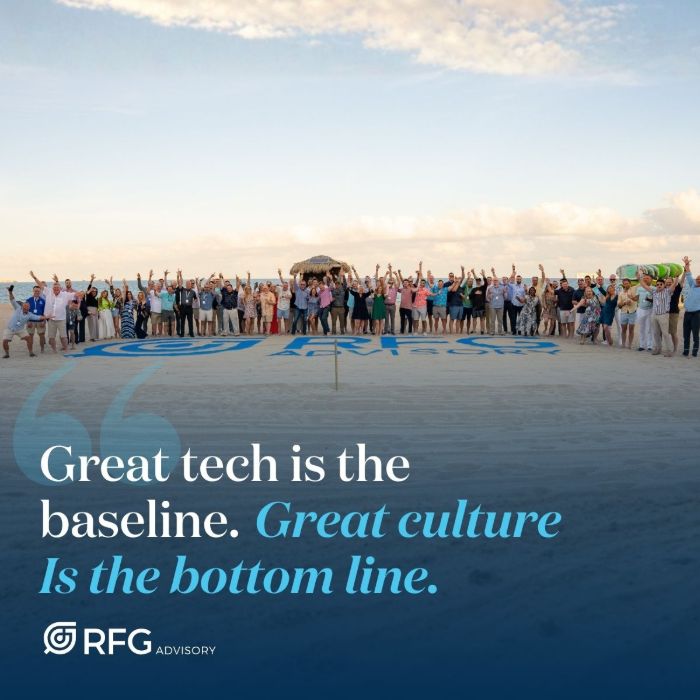
“Great technology is the baseline. Great culture is the bottom line.”
That philosophy may become one of the most important indicators of which firms are positioned to thrive over the next decade.
The AI Question Isn’t About Technology. It’s About Leadership.
At its core, AI is not simply a technology decision. It is a leadership decision.
Every investment, implementation, and strategic priority reflects a set of beliefs about how a firm intends to grow, how it views its people, and what kind of experience it wants to create for Advisors and clients.
Consider two firms investing heavily in artificial intelligence. Both may implement similar tools, automate similar processes, and market similar capabilities. Yet the Advisor experience can be dramatically different depending on the philosophy driving those investments.
| AI as a Cost-Cutting Tool | AI as a Capacity-Creation Tool |
| Focus on reducing expenses | Focus on creating Advisor capacity |
| Measures success by efficiency gains | Measures success by Advisor growth |
| Uses automation to replace work | Uses automation to elevate work |
| Emphasizes operational savings | Emphasizes client experience |
| Reduces human touchpoints | Creates more opportunities for human connection |
The technology may be identical. The outcomes are not.
For Advisors, that distinction matters because it directly affects how much time they spend serving clients, growing their businesses, and building enterprise value.
The firms that create the most value for Advisors are not asking, “How much work can AI eliminate?” They’re asking, “How much opportunity can AI create?” That’s a very different conversation, and one that reveals a great deal about a firm’s culture.
What Advisors Should Be Thinking About Right Now
Most Advisors evaluating technology ask practical questions:
- What tools does the platform offer?
- Does it integrate with my existing systems?
- Will it save me time?
- How does it compare to what I use today?
Those are valid questions, but they are increasingly becoming baseline questions.
As AI becomes embedded into every aspect of wealth management, Advisors should also evaluate the philosophy behind the technology. The firms that will create the best Advisor experience are those that view technology as a way to empower people rather than replace them.
Questions Every Advisor Should Ask Leadership
✓ What is your long-term vision for AI?
✓ How will AI improve the Advisor experience?
✓ How will AI help me spend more time with clients?
✓ How will AI help me grow my business?
✓ How will AI enhance human relationships rather than replace them?
✓ How are you investing in people alongside technology?
The answers often reveal more about a firm’s future than a technology demonstration ever could.
The Real Opportunity Isn’t Efficiency. It’s Capacity.
The wealth management industry has spent years talking about efficiency. AI certainly delivers that. Administrative tasks, meeting summaries, workflow management, compliance monitoring, and data analysis can all be streamlined through intelligent systems.
But efficiency is only valuable if it creates something more meaningful.
The true opportunity is capacity.
When Advisors reclaim hours previously spent on operational work, they gain the ability to reinvest that time elsewhere. They can deepen client relationships, pursue new growth opportunities, mentor team members, and focus on the strategic activities that drive enterprise value.
This is where many firms will diverge. Some will view AI primarily as a way to reduce costs and improve productivity metrics. Others will view it as a way to help Advisors operate at a higher level and create a better experience for clients.
The Question Every Firm Should Be Asking
When technology gives Advisors time back, what do we want them doing with it?
The answer says everything about a firm’s priorities.
If the answer is more client conversations, more proactive planning, more growth opportunities, and more time spent building relationships, the firm is likely using AI as a growth strategy. If the answer begins and ends with efficiency, Advisors should pay attention.
Why Human Skills Are Becoming More Valuable
One of the greatest misconceptions about artificial intelligence is that it will make human interaction less important.
The opposite may be true.
As technology becomes more capable, uniquely human skills become more valuable. Clients do not hire Financial Advisors because they lack access to information. Information is abundant. What clients seek is judgment, perspective, accountability, and confidence during periods of uncertainty.
They need someone who can help them navigate retirement decisions, business transitions, family dynamics, market volatility, and life-changing events. They need someone who understands both the financial and emotional aspects of major decisions.
These are not technology problems. They are human problems.
The firms that understand this are using AI to amplify the Advisor’s role rather than diminish it. By removing operational complexity and repetitive tasks, technology creates more space for the conversations that matter most.
The future of advice is not less human. It is more human, supported by better technology.
The Firms That Win Will Use AI in Service of a Larger Vision
Over the next decade, every major platform will have AI capabilities. Every CRM will have AI. Every planning tool will have AI. Every technology provider will promote intelligent automation and predictive insights.
The firms that stand apart will not necessarily be the firms with the most technology. They will be the firms that use technology in the service of a larger vision.
They will use AI to help Advisors create better client experiences. They will use AI to simplify complexity. They will use AI to create capacity for growth. And they will use AI to strengthen the human relationships that sit at the center of great financial advice.
Technology is becoming the cost of entry. Culture remains the differentiator.
For Advisors evaluating their future, that distinction matters. The decisions firms make today around AI will shape the Advisor experience for years to come. They will influence how work gets done, how teams collaborate, how clients are served, and ultimately how much value Advisors can create.
The Bottom Line for Advisors
As you evaluate your future, whether you’re considering independence, assessing your current platform, or simply thinking about where the industry is headed, pay close attention to how firms are responding to AI.
Not just what they’re building. Why they’re building it.
The firms that view AI as a way to empower Advisors, create capacity, and strengthen human relationships are likely the same firms building for sustainable growth, stronger cultures, and greater enterprise value.
“Great technology is the baseline. Great culture is the bottom line.”
The future belongs to firms that understand both.
The Future of Advice Requires More Than Great Technology
Technology is becoming the baseline across wealth management. The firms that create lasting value for Advisors will be the ones that pair innovation with leadership, culture, and a clear vision for the future.
At RFG Advisory, AI is not viewed as a replacement strategy. It is a growth strategy. Every technology investment is designed to create capacity, remove friction, and help Advisors spend more time on the work that drives growth and deepens client relationships.
ClickONE transforms fragmented technology into a single AI-powered Advisor experience, connecting the systems, data, and workflows Advisors use every day. By eliminating the need to navigate multiple platforms, ClickONE helps Advisors operate more efficiently and focus on what matters most.
If you’re evaluating whether your current platform is building for the future, we’d welcome the opportunity to show you what that looks like in practice.
Learn how RFG helps Advisors Build Their Business Without Compromise™.
A firm’s AI strategy reveals whether leadership views technology as a cost-cutting mechanism or a growth tool. Firms that use AI to create Advisor capacity, deepen client relationships, and reduce operational friction reflect a fundamentally different set of priorities than firms that measure success purely by efficiency gains. How a firm deploys AI is a values statement.
AI in wealth management is shifting firm operations from reactive to proactive. Firms are investing in AI across workflow automation, data analysis, and client service in order to reallocate Advisor time away from administrative work and toward the conversations that drive growth. That’s the thinking behind ClickONE, RFG’s AI-powered operating system built to unify Advisor workflows into a single, intelligent environment.
No. What clients seek from Advisors, judgment, accountability, and perspective during periods of uncertainty, can’t be replicated by technology. As AI takes on more operational and administrative work, we believe the human side of the relationship only becomes more valuable. That’s why RFG invests in Strategic Coaching, one-to-one support that helps Advisors sharpen exactly those human skills.
Efficiency means doing the same work faster. Capacity means reclaiming time to do higher-value work. A firm using AI purely for efficiency reduces costs. A firm using AI for capacity enables Advisors to serve more clients, pursue growth, and deepen relationships. The distinction matters because it determines what advisors actually do with the time technology returns to them.
Leading firms are deploying AI to handle post-meeting documentation, CRM updates, and follow-up workflows that previously required significant manual effort. RFG Advisory has made a strategic investment in Zocks, an AI tool that captures and structures data from client conversations automatically, eliminating the administrative work that typically follows every client meeting.
AI gives financial Advisors a single, connected view of their business so they can surface client insights, act on planning opportunities, and reduce time lost navigating disconnected systems. RFG Advisory built ClickONE around this idea: an AI-powered platform that connects every layer of an Advisor’s business and responds to natural-language questions in real time.