


Why Enterprise Value Matters for Financial Advisors
Enterprise value is the long-term value of the business you are building, not simply the revenue or AUM it produces today. For Financial Advisors, it reflects whether the business can grow, generate profit, operate efficiently, transition successfully, and create value beyond the Advisor’s individual production.
That distinction matters because a successful advisory business and a valuable enterprise are not necessarily the same thing.
| The Distinction |
|---|
| Revenue measures what your business produces. Enterprise value measures what your business is becoming. |
For growth-minded Advisors, this changes the question. Instead of asking only how much AUM or revenue the business can generate this year, enterprise value asks what all of that success is building toward.
A Successful Advisory Business Is Not Automatically a Valuable One
A Financial Advisor can build significant AUM, strong revenue, loyal client relationships, and an impressive career without necessarily building a business that can operate, grow, or transfer independently of that Advisor. One of the clearest tests is simple: if you stepped away, could another Advisor or leadership team realistically step in and keep the business moving forward?
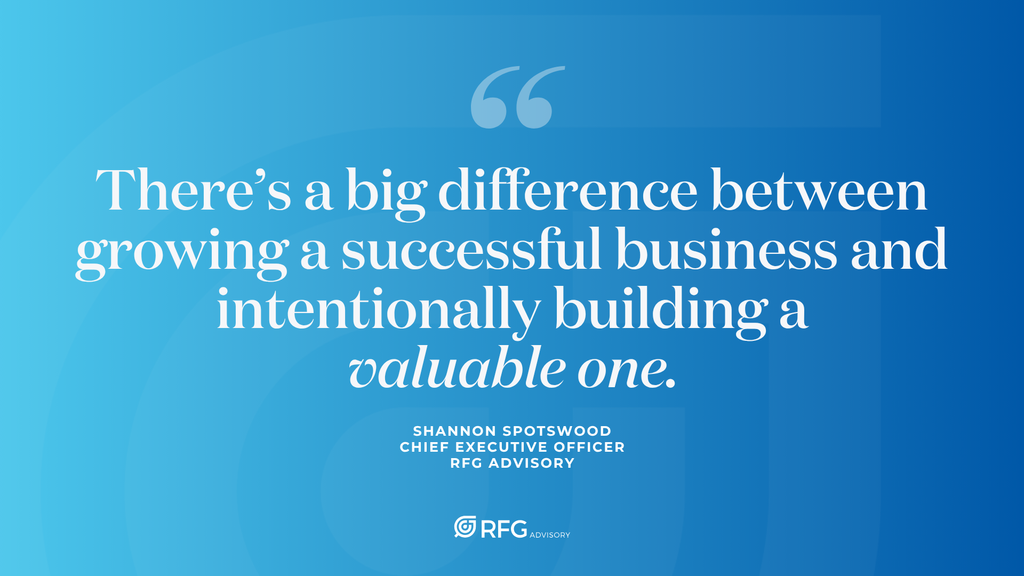
That was one of the central ideas in RFG Advisory’s The Next Move webinar: there is a difference between growing a successful business and intentionally building a valuable one.
| A successful business may have | A business built for enterprise value adds |
|---|---|
| Strong AUM | Ownership |
| High revenue | Profitability |
| Loyal clients | Organic growth |
| A productive Advisor | Repeatable operations |
| Team depth | |
| Succession planning | |
| Transferability |
The first group describes a successful business. The second begins to describe an enterprise. The goal is not to diminish production. Revenue and AUM matter. The point is that enterprise value asks whether those results are supported by a business designed to become stronger over time.
What Drives Enterprise Value for Financial Advisors?
During The Next Move, RFG President Ed Swenson distilled enterprise value into three fundamental drivers: growth, scale, and profitability.
| 01 | Growth Is the business consistently bringing in new clients, assets, and revenue through repeatable organic growth? |
| 02 | Scale Can the business serve more clients and manage more assets without complexity and expenses increasing at the same rate? |
| 03 | Profitability How effectively does revenue translate into sustainable profit that can support reinvestment and long-term value? |
Those outcomes do not happen in isolation. Team, technology, operational efficiency, ownership structure, brand, client relationships, succession planning, and the degree to which the business depends on one person can all influence the economics underneath them.
Enterprise Value Is About Building Beyond Production
Production tells you what an Advisor can generate. Enterprise value asks whether that production is becoming an asset with durable value.
Can the Business Operate Without You?
Transferability is not only a succession question. It is an operating-model question. A business becomes less dependent on one individual when client service, workflows, decision-making, technology, and team responsibilities are supported by established, repeatable processes.
That does not mean the Advisor becomes replaceable in the client relationship. It means the enterprise is not held together by one person’s memory, availability, or personal production. The more consistently the business can deliver its client experience and execute its operations without relying on a single individual, the more durable the business may become.
A useful question for any growth-minded Advisor is: could someone else step into this business and understand how to serve clients, lead the team, and keep the operation running? If the answer is no, the next phase of value creation may be less about adding more revenue and more about building the infrastructure that makes today’s success repeatable.
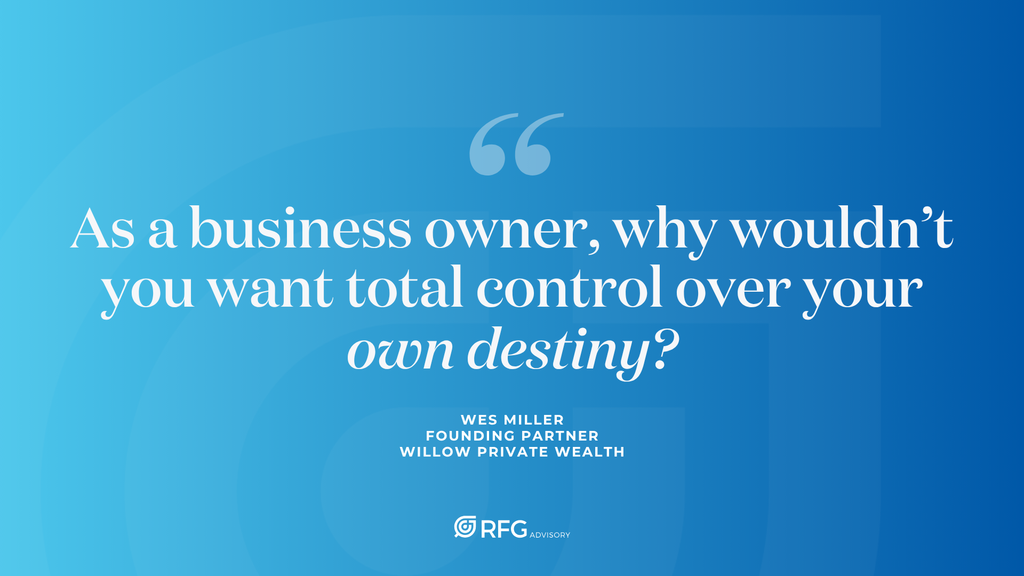
Ownership matters because it changes the lens through which an Advisor evaluates growth. The conversation can move from annual payout and production toward equity, control, profitability, succession, and the value of the business itself. But ownership structure should be evaluated by the economics and capabilities it creates, not by the label alone.
Does Owning Your Own ADV Automatically Create More Value?
Not necessarily. Owning an RIA can provide meaningful control and flexibility, but holding your own ADV does not automatically make the business more valuable. The more important question is whether the model improves the underlying drivers of enterprise value, including growth, margins, operating efficiency, team capacity, and transferability.
For some Advisors, building every part of the infrastructure independently can create additional cost, complexity, and management responsibility. In another model, access to shared technology, operations, compliance, talent, and growth resources may allow the Advisor to retain meaningful ownership while operating with stronger economics or more capacity to grow.
So the question is not simply, “Do I own the ADV?” It is, “Which structure gives me the strongest platform for building a profitable, scalable, transferable enterprise?” Enterprise value comes from what the business can produce and sustain over time, not from independence in name alone.
| Production to Ownership |
|---|
| Producer mindset: What am I earning this year? Owner mindset: What am I building that can become more valuable over time? |
For a deeper look at how ownership is reshaping the industry, explore why the RIA model has already won.
What Makes an Advisory Business More Valuable?
No single factor creates enterprise value. The strongest businesses tend to build several capabilities together.
Organic growth: Consistent net new assets, clients, and revenue can show that growth is repeatable rather than driven only by market appreciation.
Operational efficiency: Documented, repeatable processes, technology, and infrastructure should create capacity as the business grows, reduce key-person dependency, and make it easier for the team to operate consistently.
Team and talent: A business that can serve clients, make decisions, and continue operating beyond one individual may be more durable, scalable, and transferable.
Profitability: Growth needs to translate into sustainable economics, not simply a larger top line.
Succession planning: A business designed to continue beyond its founder has a different long-term value proposition.
Ownership structure: What an Advisor actually owns and controls matters when evaluating what the business can ultimately become.
Technology and AI Can Create Capacity, but the Advisor Still Matters
Technology can support enterprise value when it creates capacity, improves consistency, connects information, and reduces the amount of manual work required to run the business.
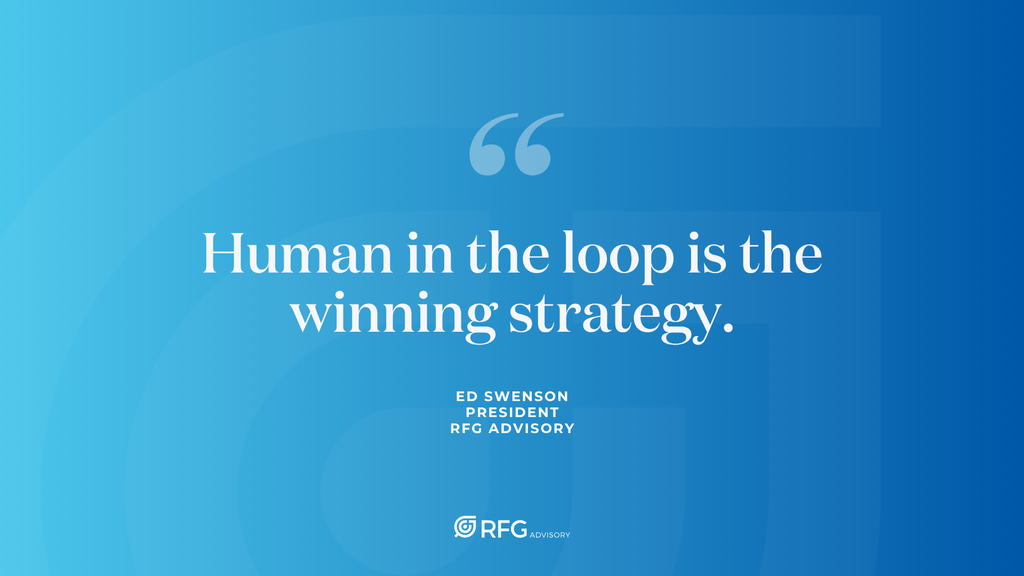
The opportunity is not technology for technology’s sake. It is using technology and AI to make the business more efficient while protecting the human judgment, trust, and relationships at the center of advice.
When infrastructure works quietly behind the scenes, Advisors and their teams can spend more time with clients, developing talent, leading the business, and driving growth. Those are the activities that can strengthen the enterprise over time.
How Do You Know What Your Business Is Worth?
There is no single AUM or revenue number that tells the entire story. Understanding enterprise value requires looking at the business as a business: its growth, profitability, operating model, capacity, ownership, long-term goals, and how dependent the enterprise is on any one person.
That is also why two advisory businesses with similar revenue can have very different long-term value. The infrastructure underneath the revenue matters, including whether the business has repeatable processes, team depth, and an operating model another leader could realistically step into.

See What Your Own Numbers Say
You have already built the business. Now ask what that success could be worth.
RFG Advisory’s Advisor Growth & Enterprise Value Simulator gives you a personalized analysis designed to help you think more strategically about operational efficiency, growth capacity, enterprise value, technology readiness, and how your current model aligns with what you want to build next.
Calculate Your Enterprise Value Potential →
Enterprise value reflects the value of the advisory business as an enterprise rather than simply the Advisor’s current production. Growth, profitability, team, operating efficiency, ownership structure, succession planning, and transferability can all contribute to long-term value.
Advisors can use RFG Advisory’s Advisor Growth & Enterprise Value Simulator to explore how these factors may influence their own business.
Revenue measures what a business generates over a period of time. Enterprise value looks more broadly at the value of the business itself and its ability to create sustainable value in the future.
Financial Advisors can focus on sustainable organic growth, profitability, operational efficiency, team development, succession planning, technology, and repeatable processes that make the business less dependent on a single individual. The goal is to build an enterprise that can continue serving clients and operating effectively even when the founder is not personally driving every activity.
See the enterprise value conversation in The Next Move webinar recap →
Not automatically. Owning an RIA can provide control and flexibility, but enterprise value depends on the economics and operating capabilities of the business. Advisors should compare growth, profitability, infrastructure, team capacity, ownership terms, and transferability across models rather than assuming a standalone ADV is inherently more valuable.
Explore why the RIA model has already won →
There is no single answer based only on AUM or revenue. Growth, profitability, operating efficiency, ownership, team structure, and other factors can affect the potential value of an advisory business.
Calculate your enterprise value potential →